2026 Top Living Room Sectionals for Global Buyers

Choosing the right living room sectionals in 2026 is less about chasing a fashionable silhouette. It is about matching comfort, space, climate, and daily habits. A compact chaise may suit a London apartment, while a deep modular sofa may work better in a spacious Dubai villa. Measurements matter. So do fabric, frame construction, delivery access, and after-sales support.

Interior designer and home-furnishings expert Nate Berkus once said, “Your home should rise up to greet you.” That idea guides this selection of top living room sectionals for global buyers. The strongest designs should welcome real life, including movie nights, visiting relatives, pets, and occasional spills. Performance fabrics, removable covers, kiln-dried frames, and flexible configurations deserve close attention. However, no sectional is perfect for every household. A soft seat can feel luxurious but may lose shape faster. A firm cushion can offer support but seem less inviting.

This guide compares leading styles through a practical, international lens. It considers apartment-friendly dimensions, modular layouts, neutral and expressive colors, sustainable materials, and regional buying concerns. Buyers should still verify local warranties, electrical requirements for recliners, import costs, and door measurements. Small details can create large problems.

Expect useful choices, not absolute answers. Personal comfort remains difficult to measure. That is the honest part.
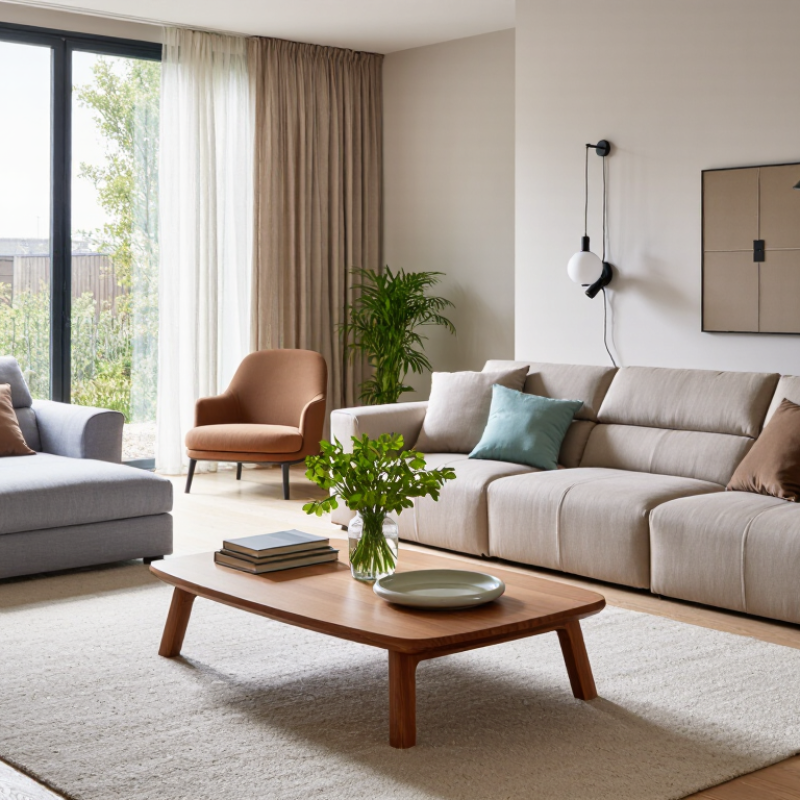
2026 Top Living Room Sectionals for Global Buyers

Understanding Living Room Sectionals and Their Global Market

In 2026, living room sectionals are more than oversized sofas for global buyers. They are flexible systems shaped by space, culture, and shipping conditions. A sectional usually combines several upholstered seats, corner units, and sometimes a chaise. This structure supports different room layouts. It also creates more planning risks.

Global demand is growing for modular designs that fit apartments, villas, and shared family spaces. Buyers in compact cities often prefer reversible chaises and storage compartments. Larger homes may require deep seats, wide corners, and separate ottomans. Fabric choices also vary by climate. Breathable woven textiles suit warm regions, while dense upholstery offers extra comfort in colder areas. Neutral colors travel well, but local preferences still influence final selections.

Professional buyers should check seat depth, frame strength, packaging size, and assembly requirements. These details affect customer satisfaction and import costs. Product documentation should clearly state materials, dimensions, care instructions, and applicable safety information. My own planning mistake was measuring only the wall, not the delivery path. The sofa fit the room. It did not fit the lift. That lesson remains important. Doorways, stair turns, elevator limits, and regional electrical requirements for integrated features need careful review. A lower price can become expensive after damage, returns, or difficult installation.
2026 Top Living Room Sectionals for Global Buyers

Understanding Living Room Sectionals and Their Global Market

Urban population share is a useful market indicator for sectional sofas because urban households often prioritize space-efficient, modular seating for apartments and modern residential interiors. Latin America and the Caribbean, North America, and Europe show the highest urban concentration among the regions compared.

Data source: World Bank, World Development Indicators, “Urban population (% of total population),” rounded regional estimates for 2023. The figures indicate potential urban demand conditions and are not direct sectional-sofa sales values.

Key Sectional Styles and Configurations for 2026

In 2026, sectional design is moving toward flexible living rather than fixed room layouts. Modular sectionals remain practical for global buyers because individual seats can be rearranged, replaced, or expanded. This matters in apartments where moving doors, narrow lifts, and changing family needs affect furniture choices. A clean-lined L-shaped sectional suits compact rooms. A U-shaped configuration creates stronger conversation zones in larger spaces.

Curved sectionals are gaining attention, especially in open-plan homes with softer architectural details. Their rounded backs improve visual flow, but they can waste wall space. Measure carefully. A chaise sectional offers relaxed lounging, while a symmetrical sofa configuration gives guests more balanced seating. Storage consoles, adjustable headrests, and hidden USB ports add daily convenience, though extra mechanisms may increase maintenance needs.

My practical advice is to map the sectional with masking tape before ordering. Leave at least 75 centimeters for comfortable circulation, and check every delivery turn. Fabric performance also deserves close attention. Families with pets may prefer tightly woven, removable covers, while hot climates often suit breathable textiles. Leather-like surfaces can feel durable, but heat and direct sunlight may change their appearance. Some choices remain imperfect. A deeper seat feels luxurious, yet shorter users may need cushions for support. Buyers should review dimensions, material specifications, care instructions, and local safety requirements before purchase. A beautiful configuration still fails if it cannot enter the room.

Materials, Comfort, and Construction Quality to Compare

2026 Top Living Room Sectionals for Global Buyers

Materials, Comfort, and Construction Quality to Compare

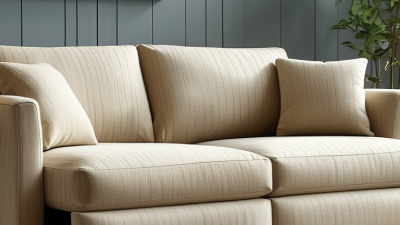
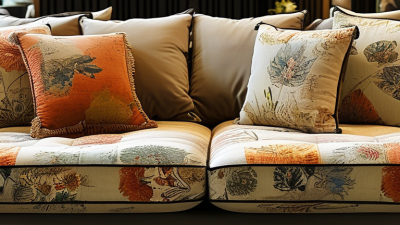
Global buyers should inspect materials before judging appearance. Top-grain leather offers durability, but it may feel cold in dry rooms. High-quality woven fabric can feel warmer and breathe better. Performance fabrics also help households manage spills and heavy daily use. Ask for fiber content, abrasion results, colorfastness data, and cleaning instructions. A beautiful sample can mislead.

Comfort depends on more than soft cushions. Seat depth, foam density, spring support, and back angle work together. Medium-firm foam usually supports longer sitting, while feather blends feel softer but need frequent reshaping. Test the sectional for at least ten minutes. Sit upright, recline, and stand repeatedly. Too soft? Maybe.

Construction quality deserves close attention. Look for kiln-dried hardwood or well-engineered plywood frames, reinforced joints, stable corner blocks, and evenly spaced support systems. Lift one end gently; excessive flexing may signal weak assembly. Check whether covers are removable and whether replacement components are available in your market. Modular connectors should lock firmly without visible gaps.

Shipping conditions can expose hidden weaknesses. Protectors, sealed packaging, and moisture control matter during long international transport. Buyers should also verify local fire-safety, labeling, and electrical requirements for any powered features. I still find that comfort judgments vary widely between households. A sectional that feels luxurious in a showroom may become tiring after several hours. Test honestly, and leave room for doubt.

Sizing, Room Planning, and International Space Requirements

For 2026, sectional sizing must begin with the room, not the sofa. UN-Habitat’s World Cities Report 2022 estimates that 58% of the global population will live in urban areas by 2030. Smaller apartments will therefore demand tighter planning.

Measure wall length, doorway width, lift depth, and turning space before ordering. Keep at least 750–900 millimetres between the sectional and a coffee table. This allows comfortable movement without making the room feel crowded.

A 2.6-metre sectional may suit a compact flat, while a 3.2-metre L-shaped design needs a wider living zone. Scale matters more than visual drama.

International access requirements also deserve careful attention. The 2010 ADA Standards use a 915-millimetre clear route as an accessibility benchmark in the United States. Local rules may differ, so global buyers should confirm regional building guidance.

Check the narrowest point, not the average passage. A sectional can fit through the main door yet fail at a sharp corridor turn. Modular pieces reduce this risk, although extra joints may affect comfort and alignment. That trade-off is easy to underestimate.

My planning preference is to draw the room at full scale, including radiators, balcony doors, and power outlets. Leave 50–75 millimetres from walls where possible. Measure twice. Real homes are rarely perfectly square.

Sources: UN-Habitat, World Cities Report 2022; U.S. Department of Justice, 2010 ADA Standards for Accessible Design.

Buying Considerations for Global Buyers and Regional Preferences

2026 Top Living Room Sectionals for Global Buyers

Choosing a sectional for international use requires more than attractive styling. Measure doorways, elevators, stair turns, and the final room before ordering. A sofa can fit the floor plan but fail at the entrance. Modular pieces often simplify delivery and future relocation. Confirm seat depth, frame materials, fabric performance, and replacement-part availability with the seller.

Regional preferences can influence practical choices. North American homes often accommodate wider, deeper sectionals and generous chaise lounges. Many European apartments favor compact, reversible designs with cleaner lines. In Asian cities, lift dimensions and limited living areas may make smaller modules more useful. Warmer regions may benefit from breathable upholstery, while colder climates often suit softer, insulated textiles. These patterns are useful, but they are not rules. Household habits matter more than a map.

Tips: Request a scaled floor plan, fabric samples, and written delivery terms. Check packaging dimensions before purchase. Ask whether local technicians can handle assembly and repairs. Verify care instructions for humidity, sunlight, and frequent use. I once underestimated walking space around a chaise; the room felt crowded despite accurate measurements. Leave at least one clear route through the seating area, and reconsider oversized layouts when children, pets, or older adults use the room daily.

2026 Top Living Room Sectionals for Global Buyers - Buying Considerations for Global Buyers and Regional Preferences
Sectional Type Typical Configuration Indicative Planning Dimensions Key Buying Considerations Regional Preference Patterns Best Fit Global-Buyer Checklist
Modular L-Shape Three-seat sofa with a chaise or corner module Approx. 240–330 cm wide; 150–210 cm chaise depth; 85–105 cm overall depth Confirm left/right orientation, module connectors, removable covers, and delivery access before ordering. Widely suitable for North American, European, Australian, and larger urban living rooms; reversible layouts are especially useful for rental homes. Medium-to-large rooms and flexible household layouts Measure lifts, stairwells, doorways, corridors, and the final turning path inside the room.
Compact Apartment L-Shape Two-seat sofa with a short chaise or corner seat Approx. 190–245 cm wide; 135–175 cm chaise depth; 80–95 cm overall depth Prioritize narrow arms, shallow depth, raised legs, and flat-pack or sectional delivery options. Frequently appropriate for dense European and East Asian cities, as well as smaller urban apartments worldwide. Small living rooms, studios, and serviced apartments Leave practical circulation space around entrances, cabinets, and balcony or patio doors.
U-Shape Conversation Sectional Three connected sides with a central open or enclosed seating area Approx. 300–420 cm wide; 220–300 cm overall depth Check room proportions, traffic flow, corner access, structural support, and the number of separate modules. More common in spacious North American, Middle Eastern, and suburban living rooms than in compact city apartments. Large family rooms and entertainment spaces Keep a clear walkway of about 75–90 cm where people regularly pass.
Reversible Chaise Sectional Sofa with a chaise that can be installed on either side Approx. 210–290 cm wide; 145–190 cm chaise depth Verify whether the chaise is genuinely reversible and whether the connector hardware supports repeated reconfiguration. A practical choice for renters, first-home buyers, and buyers who may change room layouts. Multi-purpose rooms and changing floor plans Confirm both configurations fit without blocking windows, radiators, vents, or doors.
Sleeper Sectional L-shaped seating with a pull-out or fold-down sleeping surface Approx. 240–330 cm wide; allow an additional 90–120 cm clearance when opened Evaluate mattress thickness, opening mechanism, sleeping dimensions, frame strength, and linen storage. Useful in compact European apartments, urban homes in East Asia, and guest-focused homes in many regions. Guest rooms, studios, and homes without a dedicated guest bedroom Check the fully opened footprint, not only the closed sofa dimensions.
Deep-Seat Lounge Sectional Low-profile sofa with generous seat depth and loose cushions Seat depth commonly about 60–75 cm; overall depth often 100–115 cm Test sitting posture, cushion firmness, back support, fabric durability, and cleaning requirements. Often preferred in larger North American and Middle Eastern rooms; may be less suitable for narrow European or East Asian spaces. Relaxed lounging, media rooms, and family spaces Select seat depth according to user height and intended posture rather than appearance alone.
Performance-Fabric Family Sectional Standard L-shape or modular layout with stain-resistant upholstery Commonly 220–360 cm wide; select depth according to room size Review abrasion testing, colorfastness, pilling resistance, cleaning codes, fiber content, and spare-cover availability. Relevant across all regions, especially households with children, pets, frequent entertaining, or humid conditions. High-use family rooms and hospitality-style residential settings Ask for test methods and care instructions that are recognized in the destination market.
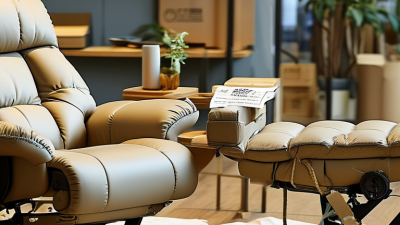
Reclining or Motion Sectional Powered or manual reclining seats integrated into a sectional Approx. 250–380 cm wide; allow 15–45 cm behind the back depending on mechanism Check voltage compatibility, plug type, motor warranty, reclining clearance, noise, and replacement-part support. More frequently selected for large media rooms and aging-in-place applications; less suitable where floor space is limited. Home theaters, accessible living spaces, and comfort-focused rooms Confirm electrical safety certification and operating voltage for the destination country.
Outdoor-Transition or Sunroom Sectional Weather-oriented modular seating for covered or semi-covered spaces Commonly 180–320 cm wide; seat height often about 38–48 cm Use only materials rated for the intended exposure; assess UV resistance, drainage, mildew resistance, and cover storage. Particularly relevant to warm-climate markets, Australia and New Zealand, coastal areas, and homes with covered terraces. Covered balconies, patios, sunrooms, and indoor-outdoor living areas Do not assume “water-resistant” means suitable for continuous outdoor exposure; follow the care specification.
Planning notes: Dimensions are indicative residential planning ranges, not fixed product standards. Regional patterns describe common market tendencies and do not represent every household. Before purchase, confirm local safety requirements, electrical standards, fire-labeling rules, import duties, warranty coverage, assembly service, packaging dimensions, and after-sales support.